Pakistan Institute of Incident InvestigationLahore · Karachi · Islamabad · International Insights Cases Q&A About WhatsApp
P3i — Pakistan Institute of Incident Investigation

Home  /  Investigations  /  Serious Incident & HiPO

Serious Incident & HiPO Investigation — Pakistan & International

Nobody was hurt. That is not the same as nothing happened.

A load drops a metre from a worker. A gas release finds no spark. A reversing forklift misses a pedestrian by a step. The causes are the same as a fatality's; the only difference was luck. We investigate these events by what could have happened, and we do it before luck runs out.

Safety record

2,190

Days without a lost-time injury

The board at the gate measures how often people get hurt. It does not measure how close they came.

Since the 1990s

30

years investigating

250+

investigations closed, incl. HiPOs

15

countries served

20+

countries of lead seminars

100+

nationalities trained

Grade it two ways

Same event. Same causes. Two very different files.

Pick an event, then switch between grading it by what happened and grading it by what could have happened.

A lifting sling parts during a lift

1

First aid

2

Medical treatment

3

Lost time

4

Permanent injury

5

Fatality

Graded by outcome: toolbox talk and closed

Nobody was hurt, so most systems record this as a minor event and close it within a day. The causes stay in place.

What separated it from a fatality

The rigger had stepped out from under the load to answer a radio call two seconds earlier.

Barriers that held

Nothing held. Only the rigger’s position changed.

Barriers that failed

Sling inspection record out of date; exclusion zone under the lift not enforced; lift plan not written for a routine lift.

Illustrative events, typical of what HiPO investigations examine.

Had a close call? A first call costs nothing, and tells you whether it should be treated as high potential.

Talk to an investigator WhatsApp

The celebration problem

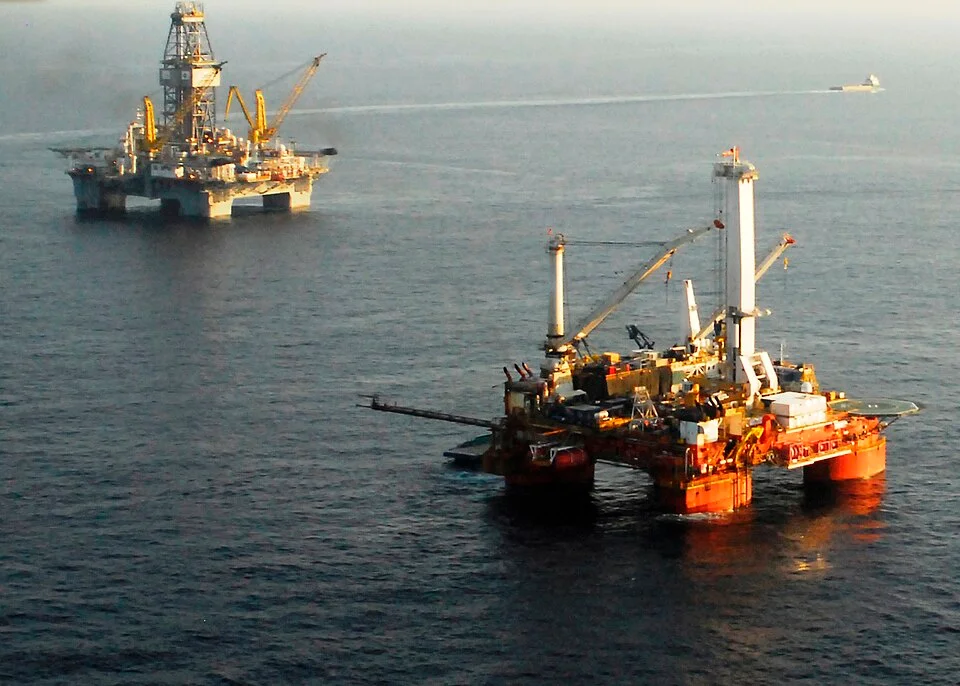
Two of the world's worst disasters happened at sites proud of their safety record.

Offshore drilling rig at sea

Overseas — offshore drilling

Seven years without a lost-time injury

On the day of the blowout, senior managers were on board partly to mark seven years without a lost-time injury on the rig. That evening the well blew out. Eleven people died and the largest marine oil spill in history followed.

Oil refinery process units

Overseas — oil refinery

Good injury figures, weak process safety

An explosion killed fifteen people and injured about 180. The independent review found that the company had focused on personal injury rates, which looked good, while the signs of process-safety risk were not being tracked with the same attention.

Counting injuries is not the same as controlling risk.

Minor injuries and major disasters often have different causes. A slip on a wet floor tells you little about a failing pressure relief valve. The events that predict a disaster are the high-potential ones: the near miss, the barrier found not working, the alarm that was silenced. Those are the events worth investigating properly.

The ratio everyone quotes

For every serious injury, 600 warnings.

In 1969 Frank Bird analysed about 1.7 million incident reports from 297 companies. For every serious injury he found about 10 minor injuries, 30 property-damage events and 600 near misses.

The ratio is often misread as "fix the small things and the big ones go away". The useful reading is narrower: some of those 600 events had the potential to be the serious one. Finding which ones is the whole point of a HiPO investigation.

1Serious
10Minor injury
30Property damage
600Near misses — no injury, no damage

Source: F. E. Bird, Insurance Company of North America study, 1969.

Why near misses go unreported

In many workplaces, reporting a near miss feels like confessing.

Workers on a Pakistani production floor during a shift
  1. The bonus depends on the board

    When a department's incentive is tied to injury-free days, a near miss becomes something to keep quiet.

  2. Contract workers fear losing the job

    Daily-wage and contractor staff, often the people closest to the hazard, have the most to lose by speaking up.

  3. Respect for seniority silences juniors

    A young operator will rarely say that a supervisor's instruction almost killed someone.

  4. The form asks who, not why

    Reporting systems that begin with a name produce fewer reports, and the ones they do produce are defensive.

  5. Nothing happens after a report

    When people report and see no change, they stop. Silence then looks like safety.

The P3i approach

How we investigate a serious incident. Fact-finding, not fault-finding.

Every P3i investigation is led by a senior investigator and supported by internationally qualified process specialists. You will not receive a list of people to blame, or a long list of generic actions. You will receive the facts, the proven causes, and a short plan that closes the gaps, in this case and across your system.

Independent

No products, repairs or contracts to sell you afterwards.

Senior-led

Thirty years of investigation, from the first call to the final briefing.

Beyond the event

Process specialists find the other cracks before they fail.

Ready to present

Written for boards, buyers, insurers and regulators.

How P3i does it for you

  1. 01

    Grade the potential

    We help you judge what could have happened, not only what did, so the event gets the investigation it deserves.

  2. 02

    Engage within 48 hours

    A lead investigator is engaged within 48 hours, while the scene and memories are still fresh.

  3. 03

    Find the barriers that nearly failed

    We test every defence between the hazard and the people, and why the last ones held by luck.

  4. 04

    Trace them to the system

    Each weak barrier is followed back to the procedure, design or supervision gap behind it.

  5. 05

    Share the learning

    A briefing your other sites can use before the same event happens there.

What you receive

Potential severity gradingBarrier analysisVerified timelineControl gaps across sitesTargeted action planLearning bulletin for other sites

Call us when

A near miss that could have killedA dropped load or loss of containmentA barrier failed but nobody was hurtYour parent company requires HiPO reporting

Free 30-minute case assessment.

Tell us what happened. In confidence, we will tell you what the investigation should cover, how long it will take and what to preserve today.

How we work with you

What happens after you call.

For a high-potential event, the first call is about grading it properly. From there, this is the usual pattern.

  1. First hour

    A call with a lead investigator. You leave it knowing what to preserve today and who to call next.

  2. Day one

    An investigator on site, anywhere in Pakistan. Scope and fixed fee agreed in writing.

  3. Week one

    A private briefing on early findings, so urgent risks are dealt with before the report is finished.

  4. Weeks three to four

    The final report, the wider system review and a remedial work plan, presented to your team.

  5. After

    We come back to check the actions were completed and actually worked.

Typical timings for a single-site event. Complex, multi-party matters take longer, and we tell you so on the first call.

What you receive

A full investigation report. This is only its first page.

The summary is what leadership reads first. Behind it sits the complete file: every witness heard, every document and record examined, and every finding tied to numbered evidence, so a board, an insurer, a buyer or a regulator can test it.

P3i Investigation Report · Summary Page 1 · Executive summary

1 · Established sequence

2 · Causes

Immediate
Underlying
Systemic

3 · Wider system findings

4 · Remedial work plan

ActionOwnerDateTest of effectiveness Fit personal locks for every operatorPlant Mgr30 daysSpot audit, 10 isolations

Illustrative summary page. Report length and structure depend on the scope of each case.

Inside the full report

  1. 01Executive summary SHOWNThe findings and actions leadership needs, on one page. This is the page shown here.
  2. 02Terms of reference & scopeThe questions asked, the boundaries of the investigation and who commissioned it.
  3. 03MethodHow evidence was gathered, and which analysis methods were chosen for this case, and why.
  4. 04Verified chronologyThe sequence of events, reconstructed from records, data and accounts, minute by minute where it matters.
  5. 05Site & technical examinationScene, equipment, failed parts, measurements and photographs, with specialists where needed.
  6. 06Witness evidenceInterview schedule, accounts in summary, and where the witnesses agree and where they conflict.
  7. 07Documents & recordsPermits, procedures, maintenance, training, rosters, CCTV, tracker and control-system data reviewed.
  8. 08Causal analysisImmediate, underlying and system causes, each one tied to numbered evidence.
  9. 09System reviewWhere the same weaknesses exist elsewhere in the operation.
  10. 10Findings & conclusionsWhat is proven, what is probable, and what remains open, stated plainly.
  11. 11Recommendations & work planTargeted actions, each with an owner, a date and a test of whether it worked.
  12. 12AppendicesEvidence register, photograph log, interview records, drawings and data extracts.

Every action has an owner, a date and a test of whether it worked. The evidence stays indexed, so any reader can check how each conclusion was reached.

You commission one investigation. You get a review of the whole system.

One near miss shows you which barriers are really there.

A high-potential event tests the barriers the whole site depends on. Once the cause is established, our process specialists check those same barriers across the operation. You get targeted actions for the gaps that would produce the next serious event, not a list of reminders.

The event

A sling parts during a routine lift

Nobody hurt. First recorded as "equipment failure — replaced".

Lifting gear

Nine more slings on site were past their inspection date.

Purchasing

Slings were bought on price without a rated certificate.

Planning

"Routine" lifts were exempt from lift plans, so most lifts had none.

Exclusion zones

No area of the site marked or enforced a zone under suspended loads.

Contractors

Contract riggers brought their own gear, which nobody checked.

Reporting

Two earlier sling failures had been fixed quietly and never logged.

A typical example, based on what we see across many HiPO investigations. Not a single client’s case.

From our files

CASE 03 · ANONYMISEDFatal industrial incident after fatigue and a bypassed safeguardRead the case →CASE 01 · ANONYMISEDFatal snakebite at a remote industrial worksiteRead the case →

See all 16 cases →   Client names, people, locations and dates removed.

Questions about HiPOs

What managers ask us first.

What exactly is a HiPO?

An event that could reasonably have killed someone or caused a life-changing injury, whatever actually happened. It is graded by its credible worst outcome and investigated with the same depth as an event that caused serious harm.

Nobody was hurt. Why spend money investigating?

Because the causes are the same as a fatality's, and a near miss is the only chance to learn them without paying for them. The cost of the investigation is small next to the cost of the event it prevents.

We have years without a lost-time injury. Are we safe?

Not necessarily. Injury rates measure frequent, minor harm. They say little about the rare events that kill people, and several of the world's worst industrial disasters happened at sites with excellent injury records.

How do you decide an event is high potential?

We ask what the credible worst outcome was if one more thing had gone differently, and which barriers stood in the way. If only luck stood in the way, it is a HiPO.

Will you only look at this event?

No. Our process specialists check the same barriers across the whole operation and give you targeted actions for the gaps that would lead to the next serious event.

Can you train our people to do this themselves?

Yes. Our HiPO investigation course teaches teams to grade potential, map barriers and interview without blame. We have trained nationals of more than 100 countries.

Related

HiPO Investigation Training Barrier Analysis Injury & Fatality Why Problems Repeat

Had a close call?

Investigate the near miss. It is the cheapest lesson you will get.

Discuss a HiPO 042 37135571-3
Investigator on site
Evidence being recorded
Interview in progress
Findings briefing