Pakistan Institute of Incident InvestigationLahore · Karachi · Islamabad · International Insights Cases Q&A About WhatsApp
P3i — Pakistan Institute of Incident Investigation

Home  /  Investigations  /  Property & Asset Damage

Property & Asset Damage Investigation — Pakistan & International

The damage is what you can see. The loss is what you cannot.

Roof and structural collapse, warehouse racking failure, water ingress, storm and flood damage in Lahore, Karachi, Faisalabad and beyond. We establish how the damage happened, and we measure it against what it really cost: the days closed, the orders lost and the claim that may pay less than you expect.

Since the 1990s

30

years investigating

250+

investigations closed, incl. HiPOs

15

countries served

20+

countries of lead seminars

100+

nationalities trained

How long are you closed?

The same roof collapse. Three very different losses.

Choose how long the facility is out of action. The physical damage stays the same. Watch what happens to everything else.

Physical damage Visible
Lost production Hidden
Delivery penalties Hidden
Overtime to recover Hidden
Customers lost Hidden

1.7×

Closed for 2 weeks, the hidden losses are about this many times the cost of the physical damage.

Illustrative model for a mid-sized manufacturing facility. Real proportions vary with the business, the season and the order book.

A loss at your facility this week? A first call costs nothing, and tells you what to record before the clean-up and the repairs begin.

Talk to an investigator WhatsApp

Three things most owners learn too late

Average

The clause in your policy you may not know

If the sum insured is lower than the true value, many policies pay only in proportion. Buildings and stock declared years ago are often worth far more today, so even a partial loss can be paid partially.

2011

Your supplier's flood becomes your loss

Floods in Thailand closed industrial estates for months and stopped car and electronics production around the world. Factories with no damage at all lost output because a single supplier was under water.

33 million

People affected by Pakistan's 2022 floods

The floods reshaped how Pakistani businesses think about water. Sites that had never flooded found that drainage, roof outlets and ground floor storage were never designed for rain on that scale.

Sources: public reporting on the 2011 Thailand floods; UN and Government of Pakistan estimates on the 2022 floods.

What damages property in Pakistan

Six causes we find behind most facility losses.

Blocked roof drain on a warehouse roof

Blocked roof drains

Dust and debris clog outlets before the monsoon. Ponding water loads a light roof until it gives way.

Damaged upright on warehouse pallet racking

Racking hit by forklifts

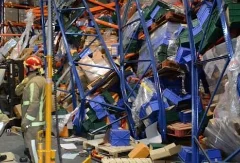
A bent upright nobody reported, a load heavier than the beam rating, and a whole run collapses like dominoes.

Water tanks on a factory roof

Weight added to roofs

Water tanks, solar panels and plant placed on roofs that were never designed for the extra load.

Roof sheeting damaged by a dust storm

Pre-monsoon storms

Sudden high winds lift poorly fixed sheeting, signage and boundary walls in minutes.

Structural crack in a factory wall

Floors added later

Extra storeys and mezzanines built on foundations designed for fewer, and cracks that were patched rather than examined.

Stock stored on a warehouse floor at risk of flooding

Stock on the floor

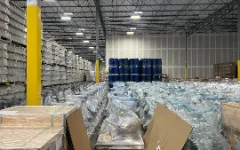
High-value goods stored at ground level in low-lying units, ruined by a few centimetres of water.

You commission one investigation. You get a review of the whole system.

One collapsed roof bay. What we then find.

Inspection

No roof inspection had been done since the building was handed over.

Loads

Solar panels had been added to the same roof with no structural check.

Drainage

Seven of twelve roof outlets were blocked on the rest of the building.

Insurance

The building's sum insured had not been updated in six years.

Continuity

There was no plan for moving production if one bay was lost.

Stock

The most valuable stock was stored directly under the weakest bay.

A typical example, based on what we see across many property loss investigations. Not a single client’s case.

The P3i approach

How we investigate a property loss. Fact-finding, not fault-finding.

Every P3i investigation is led by a senior investigator and supported by internationally qualified process specialists. You will not receive a list of people to blame, or a long list of generic actions. You will receive the facts, the proven causes, and a short plan that closes the gaps, in this case and across your system.

Independent

No products, repairs or contracts to sell you afterwards.

Senior-led

Thirty years of investigation, from the first call to the final briefing.

Beyond the event

Process specialists find the other cracks before they fail.

Ready to present

Written for boards, buyers, insurers and regulators.

How P3i does it for you

  1. 01

    Record before repair

    Photographs, measurements and failed parts before clean-up.

  2. 02

    Establish how it happened

    Roof, racking, water, storm or structure.

  3. 03

    Measure the interruption

    What extended the downtime and the true loss.

  4. 04

    Review inspection and loads

    What was checked, what was added, what was declared.

  5. 05

    Protect the rest of the facility

    Actions for every bay, roof and store.

What you receive

Loss sequenceCause findingsInterruption reviewInspection and loading gapsFacility-wide action planReport for insurers

Call us when

A roof, racking or structure collapsedFlood or storm damageA claim with a large interruptionYour insurer has appointed an adjuster

Free 30-minute case assessment.

Tell us what happened. In confidence, we will tell you what the investigation should cover, how long it will take and what to preserve today.

How we work with you

What happens after you call.

After a property loss, the first call is about recording the damage before clean-up and repairs, and gathering drawings, inspection records and the policy. From there, this is the usual pattern.

  1. First hour

    A call with a lead investigator. You leave it knowing what to preserve today and who to call next.

  2. Day one

    An investigator on site, anywhere in Pakistan. Scope and fixed fee agreed in writing.

  3. Week one

    A private briefing on early findings, so urgent risks are dealt with before the report is finished.

  4. Weeks three to four

    The final report, the wider system review and a remedial work plan, presented to your team.

  5. After

    We come back to check the actions were completed and actually worked.

Typical timings for a single-site event. Complex, multi-party matters take longer, and we tell you so on the first call.

What you receive

A full investigation report. This is only its first page.

The summary is what leadership reads first. Behind it sits the complete file: every witness heard, every document and record examined, and every finding tied to numbered evidence, so a board, an insurer, a buyer or a regulator can test it.

P3i Investigation Report · Summary Page 1 · Executive summary

1 · Established sequence

2 · Causes

Immediate
Underlying
Systemic

3 · Wider system findings

4 · Remedial work plan

ActionOwnerDateTest of effectiveness Fit personal locks for every operatorPlant Mgr30 daysSpot audit, 10 isolations

Illustrative summary page. Report length and structure depend on the scope of each case.

Inside the full report

  1. 01Executive summary SHOWNThe findings and actions leadership needs, on one page. This is the page shown here.
  2. 02Terms of reference & scopeThe questions asked, the boundaries of the investigation and who commissioned it.
  3. 03MethodHow evidence was gathered, and which analysis methods were chosen for this case, and why.
  4. 04Verified chronologyThe sequence of events, reconstructed from records, data and accounts, minute by minute where it matters.
  5. 05Site & technical examinationScene, equipment, failed parts, measurements and photographs, with specialists where needed.
  6. 06Witness evidenceInterview schedule, accounts in summary, and where the witnesses agree and where they conflict.
  7. 07Documents & recordsPermits, procedures, maintenance, training, rosters, CCTV, tracker and control-system data reviewed.
  8. 08Causal analysisImmediate, underlying and system causes, each one tied to numbered evidence.
  9. 09System reviewWhere the same weaknesses exist elsewhere in the operation.
  10. 10Findings & conclusionsWhat is proven, what is probable, and what remains open, stated plainly.
  11. 11Recommendations & work planTargeted actions, each with an owner, a date and a test of whether it worked.
  12. 12AppendicesEvidence register, photograph log, interview records, drawings and data extracts.

Every action has an owner, a date and a test of whether it worked. The evidence stays indexed, so any reader can check how each conclusion was reached.

From our files

CASE 15 · ANONYMISEDMajor fire at a textile facilityRead the case →CASE 09 · ANONYMISEDMajor equipment damageRead the case →

See all 16 cases →   Client names, people, locations and dates removed.

Questions after a property loss

What owners and finance teams ask us first.

Insurance will pay. Why investigate?

Because the claim depends on the cause, and the interruption usually costs more than the damage. An independent account supports the claim and shows what must change before the next storm or collapse.

What is the average clause?

If the sum insured is below the true value, many policies reduce the payout in proportion. We can show when the declared values stopped matching reality, which helps you correct it before the next loss.

Can we start repairs straight away?

Make it safe first, then photograph everything from wide to close and keep failed components before repairs begin. Once that is done, repairs can usually start quickly.

Will you only look at this damage?

No. Our process specialists review inspection, loading, drainage, storage and continuity across the facility, and give you targeted actions for the gaps that would cause the next loss.

Do you work for insurers on property claims?

Yes. We provide independent technical findings on cause and circumstance for insurers and loss adjusters. Policy interpretation and adjusting decisions stay with them.

Related

Fire & Explosion Construction & Contractor Fire & Property Loss for Insurers Production Loss & Downtime

A loss at your facility?

Record it before the repair. Then call us.

Report a loss 042 37135571-3