Home / RCA Methods / Root Cause Analysis
CAUSE METHODS · 10 / 12
Root Cause Analysis
How deep did you go? The answer decides whether it happens again.
Every organisation says it does root cause analysis. Most stop at the first answer that sounds reasonable. We keep going, with evidence, until we reach the control that failed, because that is the only level where the fix protects the next person.
Bars show how well a fix at each depth prevents a repeat.
Choose your depth
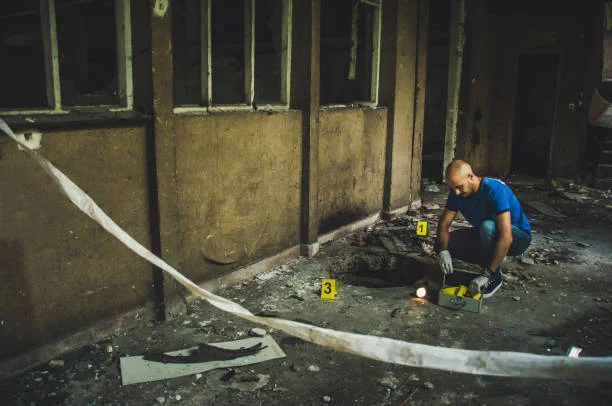
An injury in a power press. Where do you stop?
Pick a depth. See the action it leads to and whether the injury is likely to happen again. Illustrative example.
THE FINDING
Operator injured his hand in a power press.
THE ACTION IT LEADS TO
Warning letter and a talk on being careful.

Since the 1990s
30
years investigating
250+
investigations closed, incl. HiPOs
15
countries served
20+
countries of lead seminars
100+
nationalities trained
What real RCA delivers
One investigation protects every similar machine.
Fixing the control gap protects every press, every shift and every operator, not just the one involved.
It turns a costly incident into a system improvement leadership can see.
It gives insurers, buyers and regulators a credible account instead of a warning letter.
Use it for
Any serious incident or repeated problem
Quality, safety, service and business losses
Building your own investigation capability
On its own it cannot
Work without evidence
Be done properly in a single meeting
Method names are given for reference. Several are proprietary or trademarked; P3i selects the approach that suits each case and does not claim licensed certification in proprietary methods.


Your last RCA stopped at a warning letter? A first call costs nothing, and we will tell you how deep it should go.
The P3i approach
How we investigate to the root, not the symptom. Fact-finding, not fault-finding.
Every P3i investigation is led by a senior investigator and supported by internationally qualified process specialists. You will not receive a list of people to blame, or a long list of generic actions. You will receive the facts, the proven causes, and a short plan that closes the gaps, in this case and across your system.
Independent
No products, repairs or contracts to sell you afterwards.
Senior-led
Thirty years of investigation, from the first call to the final briefing.
Beyond the event
Process specialists find the other cracks before they fail.
Ready to present
Written for boards, buyers, insurers and regulators.
How P3i does it for you
- 01
Scope it honestly
What happened, what it cost, what is at stake.
- 02
Collect the evidence
Site, records and private interviews.
- 03
Analyse with the right tools
Chosen for the case.
- 04
Reach the control gap
The weakness that will produce the next event.
- 05
Fix and verify
A short plan, and a check that it worked.
What you receive
Call us when
Free 30-minute case assessment.
Tell us what happened. In confidence, we will tell you what the investigation should cover, how long it will take and what to preserve today.
Questions
What clients ask about RCA.
What makes an RCA "root"?
It reaches a control the organisation can change, such as an inspection, a design, a procedure or a target, rather than stopping at a person.
Which methods do you use?
We choose for the case: timelines, change and barrier analysis, why trees, fishbones, fault trees and human factors, often in combination.
Can you review an RCA our team already did?
Yes. We test whether the evidence supports the conclusions and show where it should go deeper.
Do you train teams in RCA?
Yes. Our Incident Investigation & Root Cause Analysis course is five days, with an optional sector module.
Go to the root. Protect the next person.