Home / RCA Methods / Change Analysis
SEQUENCE METHODS · 03 / 12
Change Analysis
What was different this time? That is where the cause hides.
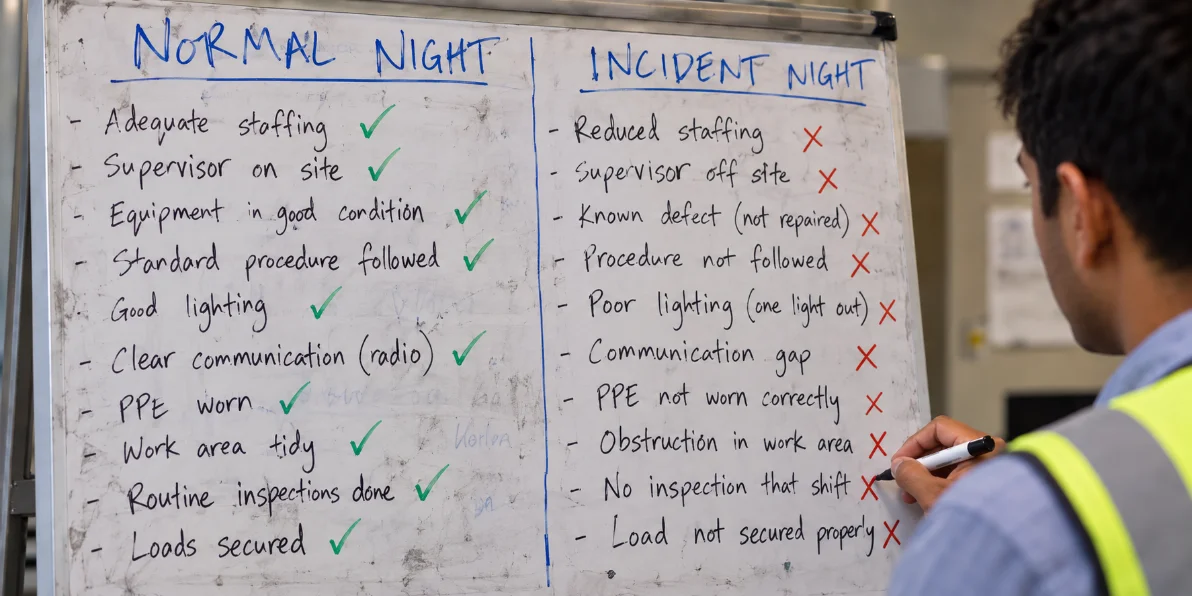
Most incidents happen on a day that was different. A new supplier, a borrowed machine, a double shift, a changed setting. We line up the normal day against the incident day, list every difference, and prove which ones mattered.
≠ a difference to test · = the same, ruled out
Since the 1990s
30
years investigating
250+
investigations closed, incl. HiPOs
15
countries served
20+
countries of lead seminars
100+
nationalities trained
Spot what changed
A forklift tipped over in a Karachi warehouse. Compare it with a normal night.
Switch on the differences, then tap any row to see whether it mattered. Illustrative example.
8 factors compared
SHIFT · CHANGED · CAUSAL
Fatigue after three nights reduced his hazard awareness on the turn.
Why it works
People remember the incident. They forget what was normal.
It turns "we have done this a hundred times" into a list of what was different this time.
It is fast: a first comparison can be built on the first day of fieldwork.
It shows leadership exactly which change needed a review and did not get one.
Use it for
Something that usually works suddenly failed
New suppliers, staff, equipment or settings
Events after a reorganisation or shift change
On its own it cannot
Explain a problem that has always existed
Show why the change was not reviewed
Method names are given for reference. Several are proprietary or trademarked; P3i selects the approach that suits each case and does not claim licensed certification in proprietary methods.


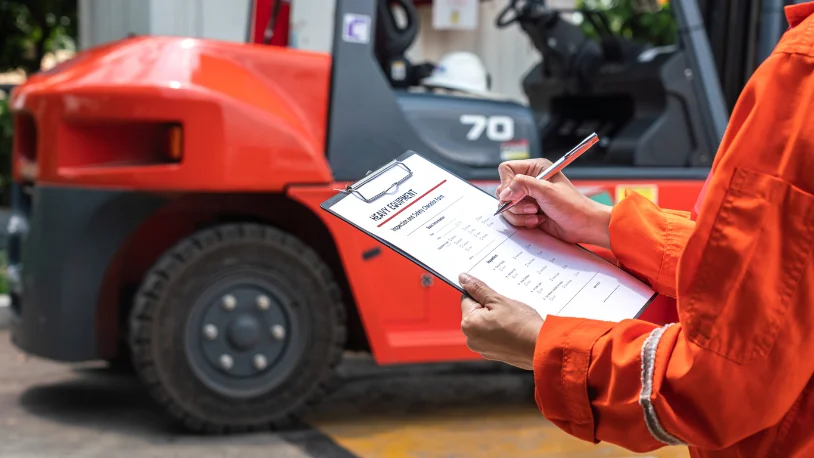
Something failed that has never failed before? A first call costs nothing, and we will tell you what to compare.
The P3i approach
How we investigate by finding what changed. Fact-finding, not fault-finding.
Every P3i investigation is led by a senior investigator and supported by internationally qualified process specialists. You will not receive a list of people to blame, or a long list of generic actions. You will receive the facts, the proven causes, and a short plan that closes the gaps, in this case and across your system.
Independent
No products, repairs or contracts to sell you afterwards.
Senior-led
Thirty years of investigation, from the first call to the final briefing.
Beyond the event
Process specialists find the other cracks before they fail.
Ready to present
Written for boards, buyers, insurers and regulators.
How P3i does it for you
- 01
Define the normal day
What usually happens when things go right.
- 02
Line up the incident day
Side by side, line by line.
- 03
List every difference
People, materials, settings, schedules, suppliers.
- 04
Test each change
Which ones actually mattered — with evidence.
- 05
Put change control in place
So the next change is reviewed before it bites.
What you receive
Call us when
Free 30-minute case assessment.
Tell us what happened. In confidence, we will tell you what the investigation should cover, how long it will take and what to preserve today.
Questions
What managers ask about change analysis.
What counts as a change?
Anything that differed from a normal, successful day: people, shifts, materials, suppliers, equipment, settings, procedures, weather and workload.
How do you define the normal day?
From records and interviews about recent days when the same work went right, not from the written procedure alone.
Is every change a cause?
No. Each difference is tested against the evidence. Many are ruled out; the ones that remain are the causal changes.
Does it help us prevent the next one?
Yes. It usually shows where change control was missing, so future changes are reviewed before work starts.
Find what changed. Then control the next change.