
Home / Investigations / Injury & Fatality
Workplace Injury & Fatality Investigation — Pakistan & International
The procedure says
Isolate the machine. Lock it. Test it. Then clean.
The floor does
Clean it while it runs, because stopping it costs the shift its target.
Most serious injuries happen in the gap between these two sentences. We investigate falls, entanglements, struck-by events, confined-space and electrical injuries by looking at the work as it was actually done, and at why doing it that way made sense to the person doing it.
Since the 1990s
30
years investigating
250+
investigations closed, incl. HiPOs
15
countries served
20+
countries of lead seminars
100+
nationalities trained
~3 million
Workers who die every year worldwide from work-related accidents and diseases, according to the International Labour Organization.
330,000
Of those deaths, roughly the number caused by accidents at work each year: about one every hundred seconds.
Informal
A large share of work in Pakistan, as across South Asia, happens in informal and contract employment, where injuries are less likely to be formally recorded or investigated.
Source: ILO, global estimates of work-related deaths, 2023.
Work as written. Work as done.
Every shortcut has a reason. Open each step to see it.
Choose a task. Each step shows what the procedure says, what actually happens, and why the person doing the work thought it was reasonable.
Why it made sense at the time
Why it made sense at the time
Restarting takes twenty minutes and the line is already behind target.
Illustrative tasks, typical of what injury investigations uncover.
Someone hurt this week? A first call costs nothing, and we will tell you how to handle the next few days with care.
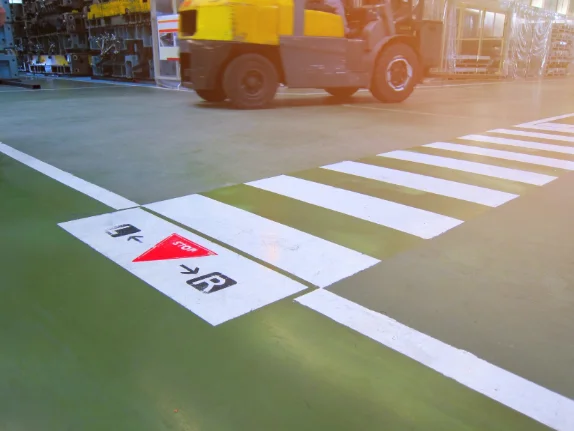
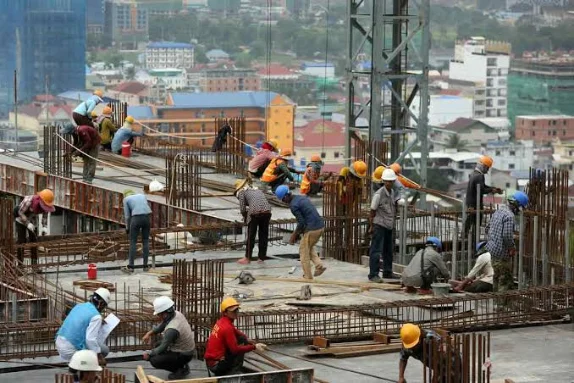
Where injuries hide
Six places we find serious injuries in Pakistani workplaces.


What the research says
Workers rarely cause failure. They trigger failures that were already waiting.
Safety researcher Todd Conklin, in Pre-Accident Investigations, argues that the conditions for an injury exist in the organisation long before anyone is hurt. Erik Hollnagel's distinction between work as imagined and work as done makes the same point: procedures describe how managers think the job is done, not how it is done.
This is why "human error" is where our investigation starts, never where it ends. Replacing the person changes nothing if the conditions that led them there stay the same.
When someone has died
A fatality investigation needs care as well as rigour.

Alongside the official inquiry, not in place of it
Our work is an organisational review for the client. We cooperate with the authorities, respect their access to the scene and their process, and focus on what the organisation itself needs to change.
Respect for the family
Findings are written without blaming the person who died. Where the client wishes, we help explain to the family, in plain language, what happened and what is being changed.
Support for the people who saw it
Witnesses and co-workers are often shaken. We interview them when they are ready, separately and without pressure, and never in front of their supervisors.
A report that can be shared
We write so the findings can be shared with the board, the workforce and, where appropriate, the authorities, without needing to be rewritten for each.
The P3i approach
How we investigate an injury. Fact-finding, not fault-finding.
Every P3i investigation is led by a senior investigator and supported by internationally qualified process specialists. You will not receive a list of people to blame, or a long list of generic actions. You will receive the facts, the proven causes, and a short plan that closes the gaps, in this case and across your system.
Independent
No products, repairs or contracts to sell you afterwards.
Senior-led
Thirty years of investigation, from the first call to the final briefing.
Beyond the event
Process specialists find the other cracks before they fail.
Ready to present
Written for boards, buyers, insurers and regulators.
How P3i does it for you
- 01
Support first, then secure
We advise on protecting the scene and records while the injured person and family are looked after.
- 02
Reconstruct the task
How the work was actually done that day, compared with how it was written.
- 03
Hear everyone privately
Separate, non-accusatory interviews with the injured person, colleagues and supervisors.
- 04
Find why it made sense
The conditions, pressures and design that led people to act as they did.
- 05
Close the gap on every similar task
Our process specialists check other crews and sites doing the same work.
What you receive
Call us when
Free 30-minute case assessment.
Tell us what happened. In confidence, we will tell you what the investigation should cover, how long it will take and what to preserve today.
How we work with you
What happens after you call.
After an injury, the first call covers the scene, the people and the official process. From there, this is the usual pattern.
First hour
A call with a lead investigator. You leave it knowing what to preserve today and who to call next.
Day one
An investigator on site, anywhere in Pakistan. Scope and fixed fee agreed in writing.
Week one
A private briefing on early findings, so urgent risks are dealt with before the report is finished.
Weeks three to four
The final report, the wider system review and a remedial work plan, presented to your team.
After
We come back to check the actions were completed and actually worked.
Typical timings for a single-site event. Complex, multi-party matters take longer, and we tell you so on the first call.
What you receive
A full investigation report. This is only its first page.
The summary is what leadership reads first. Behind it sits the complete file: every witness heard, every document and record examined, and every finding tied to numbered evidence, so a board, an insurer, a buyer or a regulator can test it.
1 · Established sequence
2 · Causes
3 · Wider system findings
4 · Remedial work plan
Illustrative summary page. Report length and structure depend on the scope of each case.
Inside the full report
- 01Executive summary SHOWNThe findings and actions leadership needs, on one page. This is the page shown here.
- 02Terms of reference & scopeThe questions asked, the boundaries of the investigation and who commissioned it.
- 03MethodHow evidence was gathered, and which analysis methods were chosen for this case, and why.
- 04Verified chronologyThe sequence of events, reconstructed from records, data and accounts, minute by minute where it matters.
- 05Site & technical examinationScene, equipment, failed parts, measurements and photographs, with specialists where needed.
- 06Witness evidenceInterview schedule, accounts in summary, and where the witnesses agree and where they conflict.
- 07Documents & recordsPermits, procedures, maintenance, training, rosters, CCTV, tracker and control-system data reviewed.
- 08Causal analysisImmediate, underlying and system causes, each one tied to numbered evidence.
- 09System reviewWhere the same weaknesses exist elsewhere in the operation.
- 10Findings & conclusionsWhat is proven, what is probable, and what remains open, stated plainly.
- 11Recommendations & work planTargeted actions, each with an owner, a date and a test of whether it worked.
- 12AppendicesEvidence register, photograph log, interview records, drawings and data extracts.
Every action has an owner, a date and a test of whether it worked. The evidence stays indexed, so any reader can check how each conclusion was reached.
You commission one investigation. You get a review of the whole system.
One injury shows you how every similar task is done.
If one worker cleaned a running machine, others do too. After the cause is established, our process specialists review the same task across the site and the systems behind it, and give you a short list of targeted actions rather than a generic one.
The event
A hand injury while clearing a jam
First recorded cause: worker did not follow procedure.
Isolation
Only two personal locks existed for a shift of forty.
Guarding
Guards were missing on six of eleven similar machines.
Targets
Stoppage time counted against the shift's production bonus.
Tools
No jam-clearing tool was designed for the machine.
Procedures
Written in English, for a workforce that mostly reads another language.
Reporting
Three earlier minor hand injuries were treated on site and not logged.
A typical example, based on what we see across many injury investigations. Not a single client’s case.
From our files
See all 16 cases → Client names, people, locations and dates removed.
Questions after an injury
What managers and HR ask us first.
The worker didn't follow the procedure. Isn't that the cause?
It is where we start. The useful question is why leaving the procedure made sense at the time: pressure, a missing tool, a procedure that didn't fit the task. Those conditions stay after the worker has gone.
How do you work with an official inquiry after a fatality?
Alongside it, never in place of it. We cooperate with the authorities and respect their process, and we focus on what the organisation itself needs to change.
Will workers talk openly to you?
More often than to their own management. We interview separately, in the language people think in, and make clear we are there to understand the work, not to find someone to blame.
The injured person was a contractor. Is that our concern?
The work happened on your site, under your permits and conditions. We examine the interface: induction, supervision, equipment, and who controlled the task when it went wrong.
Will you only look at this injury?
No. Our process specialists review the same task across the site and the systems behind it, and give you targeted actions for the gaps that would cause the next injury.
Do you investigate outside Pakistan?
Yes. P3i has worked in 15 countries and closed more than 250 investigations of all severities.
Someone hurt?