Home / RCA Methods / 5 Whys / Why Tree
CAUSE METHODS · 06 / 12
5 Whys / Why Tree
Ask why until it reaches a control. Not until it reaches a name.
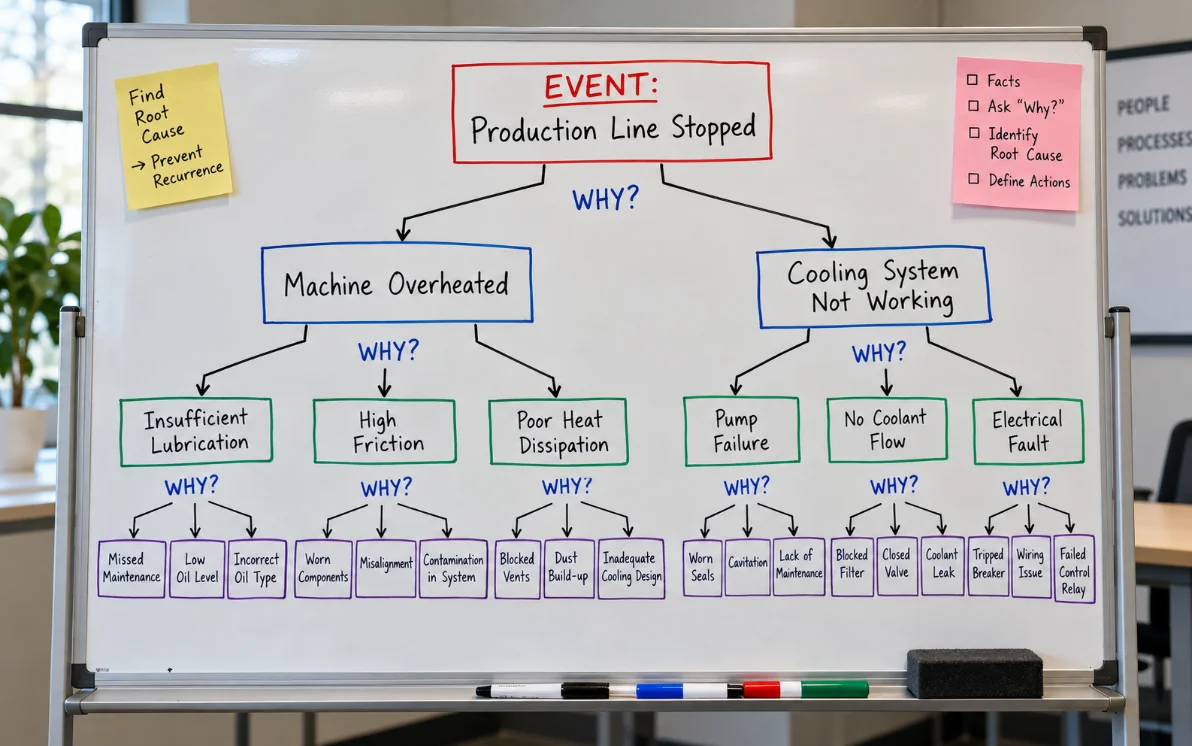
A single line of five whys usually ends at the operator. A why tree branches wherever there is more than one cause, tests every answer against evidence, and stops only when it reaches a control the organisation can fix.
Since the 1990s
30
years investigating
250+
investigations closed, incl. HiPOs
15
countries served
20+
countries of lead seminars
100+
nationalities trained
Keep asking why
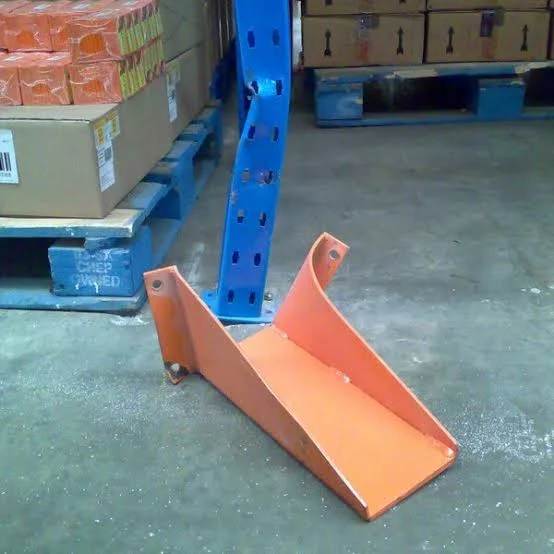
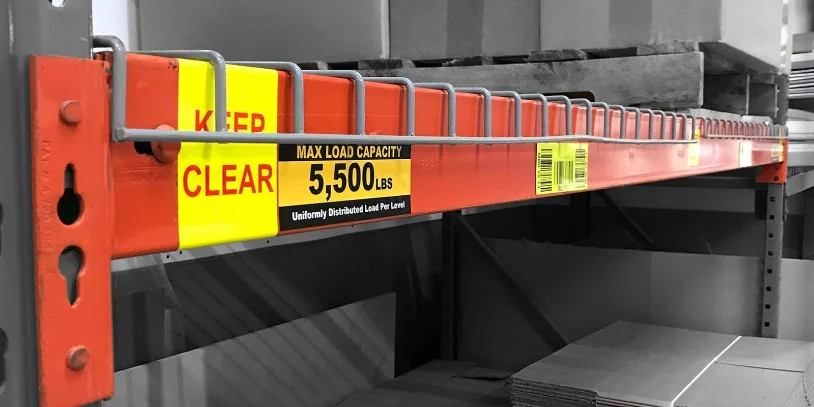
A pallet fell in a Faisalabad warehouse. Grow the tree.
Press "Ask why" to go one level deeper. Compare where a single line of whys would have stopped. Illustrative example.
THE FACT
A SINGLE LINE OF 5 WHYS WOULD STOP AT
“Forklift driver was careless”
THE WHY TREE REACHES
Keep asking why…
Why it matters
Stopping at a person guarantees a repeat.
A warning letter to the driver fixes nothing that caused the fall.
Branching finds all the causes, not just the first one someone thinks of.
Each answer is tested against evidence, so the tree holds up to challenge.
Use it for
Most incidents and quality problems
Coaching teams to go deeper than "human error"
Quick analyses that still need to be right
On its own it cannot
Map a long sequence of events
Replace evidence: an untested why is only a guess
Method names are given for reference. Several are proprietary or trademarked; P3i selects the approach that suits each case and does not claim licensed certification in proprietary methods.

Does your 5 Whys always end at the operator? A first call costs nothing, and we will show you where it should go.
The P3i approach
How we investigate by asking why until it holds. Fact-finding, not fault-finding.
Every P3i investigation is led by a senior investigator and supported by internationally qualified process specialists. You will not receive a list of people to blame, or a long list of generic actions. You will receive the facts, the proven causes, and a short plan that closes the gaps, in this case and across your system.
Independent
No products, repairs or contracts to sell you afterwards.
Senior-led
Thirty years of investigation, from the first call to the final briefing.
Beyond the event
Process specialists find the other cracks before they fail.
Ready to present
Written for boards, buyers, insurers and regulators.
How P3i does it for you
- 01
Start from the fact
Not from someone’s opinion of it.
- 02
Ask why, branch by branch
More than one cause at every level.
- 03
Test each answer
Evidence or it is struck out.
- 04
Stop at a control
Not at a person’s name.
- 05
Fix the bottom of the tree
Where one action removes several causes.
What you receive
Call us when
Free 30-minute case assessment.
Tell us what happened. In confidence, we will tell you what the investigation should cover, how long it will take and what to preserve today.
Questions
What supervisors ask about 5 Whys.
Is it always five whys?
No. Five is a guide. We stop when the answer is a control the organisation can change, which may be three whys or seven.
What is wrong with a single line of whys?
Most events have more than one cause. A single line follows one of them and misses the rest, usually ending at a person.
How do you stop it becoming opinion?
Every answer must be supported by a record, a measurement or independent accounts before the next why is asked.
Can our supervisors learn it?
Yes. It is one of the most practical methods to train, and we teach it in our RCA courses.
Ask why. Stop at a control, never at a name.