
Home / Investigations / Patient Safety Review
Independent Patient Safety Review — Pakistan & International
When care goes wrong, everyone wants to understand. Nobody wants to be blamed.
We carry out independent, non-adversarial reviews of serious patient safety incidents for hospitals, clinics and families. We look at the system of care — handovers, staffing, equipment, communication and protocols — alongside clinical specialists, so the hospital learns, the family understands, and the next patient is safer.

Since the 1990s
30
years investigating
250+
investigations closed, incl. HiPOs
15
countries served
20+
countries of lead seminars
100+
nationalities trained
How we work with hospitals
Four principles we agree before we start.
i.
Learning, not blame
We review the system of care. We do not look for an individual to hold responsible.
ii.
Clinicians judge clinical questions
Clinical judgement is reviewed only by qualified clinical peers co-opted to the review, never by investigators.
iii.
The family is heard
Families are invited to share their account and their questions, and receive findings in plain language.
iv.
Confidential throughout
How findings are shared, and with whom, is agreed in writing with the hospital at the outset.
One evening, three perspectives
The same five hours, seen three ways.
A review brings every perspective onto one timeline. Choose whose view to see.
- 6:40 pmBrought their father in with chest pain in the evening.
- 7:30 pmWaited, and were not sure who was responsible for him.
- 8:15 pmNoticed he seemed worse and asked for help twice.
- 9:50 pmWere told he had been moved, but not why.
- NowWant to know: could anything have been done differently?
What The family need from a review
An honest, plain-language account, and to know that something will change.
An illustrative example. Every review is built on the actual records and accounts of the case.
What a review involves
Six steps, agreed with the hospital.
01 · Scope
Questions, confidentiality and how findings will be shared, agreed with the hospital.
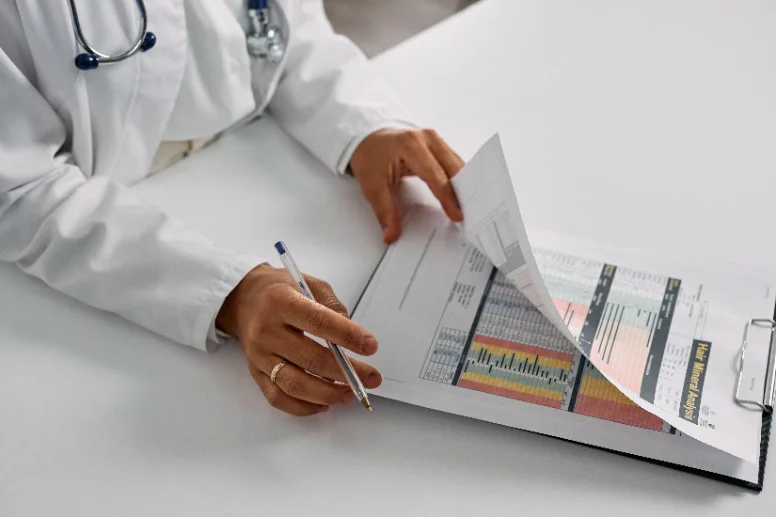
02 · Records
Charts, observations, rosters and equipment logs, assembled into one timeline.

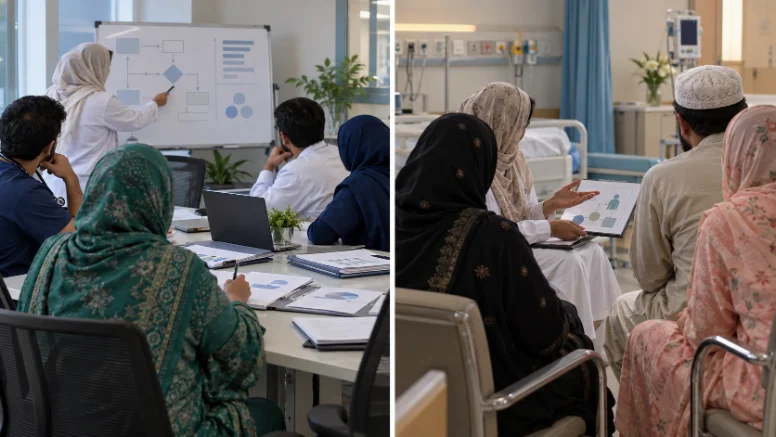
03 · Conversations
Private conversations with staff, and with the family, in the language they are most comfortable in.

04 · Clinical review
Clinical questions reviewed by qualified clinical peers relevant to the case.

05 · Systems analysis
Handovers, staffing, escalation, equipment and protocols — the conditions care was given in.
06 · Shared findings
A learning plan for the hospital, and a plain-language account for the family.
A serious patient safety concern? A first conversation is confidential and costs nothing.
1 in 10
Patients worldwide are harmed while receiving care, and around half of that harm is preventable.
Source: World Health Organization, patient safety fact sheet.
The global direction
Health systems around the world are moving away from reviews that look for someone to blame. England's National Health Service replaced its serious incident framework in 2022 with an approach centred on learning, system improvement and meaningful involvement of patients and families.
Hospitals in Pakistan pursuing national and international accreditation are expected to show the same thing: that serious incidents are reviewed openly, and that the learning is acted on. An independent review is the clearest way to show it.
You commission one review. You get a stronger hospital.
One case. Improvements across every ward.
Handover
A structured handover used at every shift change, on every ward.
Escalation
Warning scores that trigger a named response, built into the chart.
Capacity
A plan for evenings when monitored beds are full.
Families
A named contact who keeps families informed while a patient is moved.
Examples of the improvements a patient safety review typically leads to.
Who asks us

Hospitals and clinics
For serious incidents where an independent view will strengthen trust, support accreditation and bring learning the internal team is too close to see.

Families
For families who want an independent account of what happened. Where possible we work with the hospital, so the review has full access and the findings are shared openly.

Insurers and employers
For health insurers and employers funding care, who need an independent understanding of a serious event involving their members or staff.
The P3i approach
How we investigate a patient safety event. Fact-finding, not fault-finding.
Every P3i investigation is led by a senior investigator and supported by internationally qualified process specialists. You will not receive a list of people to blame, or a long list of generic actions. You will receive the facts, the proven causes, and a short plan that closes the gaps, in this case and across your system.
Independent
No products, repairs or contracts to sell you afterwards.
Senior-led
Thirty years of investigation, from the first call to the final briefing.
Beyond the event
Process specialists find the other cracks before they fail.
Ready to present
Written for boards, buyers, insurers and regulators.
How P3i does it for you
- 01
Agree the scope with the hospital
Questions, confidentiality and how findings will be shared, agreed in writing first.
- 02
Build one timeline of care
Charts, observations, rosters and equipment logs brought into one sequence.
- 03
Hear staff and the family
Private conversations, in the language each person is most comfortable in.
- 04
Clinical peers on clinical questions
Qualified clinicians review clinical judgement; we lead the systems review.
- 05
A learning plan for every ward
Specific, affordable improvements and a plain-language account for the family.
What you receive
Call us when
Free 30-minute case assessment.
Tell us what happened. In confidence, we will tell you what the investigation should cover, how long it will take and what to preserve today.
How we work with you
What happens after you call.
For a patient safety review, the first conversation is confidential. We agree the questions, who should be involved and how findings will be shared, before any records are requested.
First hour
A call with a lead investigator. You leave it knowing what to preserve today and who to call next.
Day one
An investigator on site, anywhere in Pakistan. Scope and fixed fee agreed in writing.
Week one
A private briefing on early findings, so urgent risks are dealt with before the report is finished.
Weeks three to four
The final report, the wider system review and a remedial work plan, presented to your team.
After
We come back to check the actions were completed and actually worked.
Typical timings for a single-site event. Complex, multi-party matters take longer, and we tell you so on the first call.
What you receive
A full investigation report. This is only its first page.
The summary is what leadership reads first. Behind it sits the complete file: every witness heard, every document and record examined, and every finding tied to numbered evidence, so a board, an insurer, a buyer or a regulator can test it.
1 · Established sequence
2 · Causes
3 · Wider system findings
4 · Remedial work plan
Illustrative summary page. Report length and structure depend on the scope of each case.
Inside the full report
- 01Executive summary SHOWNThe findings and actions leadership needs, on one page. This is the page shown here.
- 02Terms of reference & scopeThe questions asked, the boundaries of the investigation and who commissioned it.
- 03MethodHow evidence was gathered, and which analysis methods were chosen for this case, and why.
- 04Verified chronologyThe sequence of events, reconstructed from records, data and accounts, minute by minute where it matters.
- 05Site & technical examinationScene, equipment, failed parts, measurements and photographs, with specialists where needed.
- 06Witness evidenceInterview schedule, accounts in summary, and where the witnesses agree and where they conflict.
- 07Documents & recordsPermits, procedures, maintenance, training, rosters, CCTV, tracker and control-system data reviewed.
- 08Causal analysisImmediate, underlying and system causes, each one tied to numbered evidence.
- 09System reviewWhere the same weaknesses exist elsewhere in the operation.
- 10Findings & conclusionsWhat is proven, what is probable, and what remains open, stated plainly.
- 11Recommendations & work planTargeted actions, each with an owner, a date and a test of whether it worked.
- 12AppendicesEvidence register, photograph log, interview records, drawings and data extracts.
Every action has an owner, a date and a test of whether it worked. The evidence stays indexed, so any reader can check how each conclusion was reached.
From our files
See all 16 cases → Client names, people, locations and dates removed.
Questions we are asked
By hospitals, clinicians and families.
Will the review blame the doctors or nurses?
No. We look at the system of care: handovers, staffing, equipment, communication, protocols and workload. Clinical judgement is reviewed only by clinical peers. The aim is safer care, not blame.
Can a family ask for a review?
Yes. We will usually suggest working with the hospital, so the review has access to records and staff. Many hospitals welcome this, because it gives the family confidence in the findings.
Why would a hospital commission an independent review?
It strengthens trust with patients and families, supports accreditation and quality programmes, and often finds system improvements that an internal team, close to the events, can miss.
Who reviews the clinical questions?
Qualified clinical specialists relevant to the case, working alongside our investigators. We lead the systems review; clinicians review clinical questions.
Is it confidential?
Yes. Patient information is handled confidentially, and how findings are shared is agreed with the hospital at the start.
Understanding first. Safer care next.
A first conversation is confidential and carries no obligation.