Pakistan Institute of Incident InvestigationLahore · Karachi · Islamabad · International Insights Cases Q&A About WhatsApp
P3i — Pakistan Institute of Incident Investigation

Home  /  Investigations  /  Machinery & Equipment

Machinery & Equipment Failure Investigation — Pakistan & International

The machine warned you. Someone wrote it down.

Cranes, forklifts, lifting gear, presses, conveyors and rotating equipment rarely fail without warning. We investigate what failed and how, then read back through the maintenance history to find the warning, and why nobody acted on it.

Failed coupling or bearing recovered from industrial machinery
Fig. 1 — The fracture surface records how the part failed. The logbook records why.

Since the 1990s

30

years investigating

250+

investigations closed, incl. HiPOs

15

countries served

20+

countries of lead seminars

100+

nationalities trained

Read the logbook

Six weeks of entries. Can you see it coming?

This is what a maintenance log looks like before a serious failure. Read it once as the team did. Then switch to the investigator's view.

Eight ordinary entries. Nothing here looks alarming on its own.

Maintenance log — Line 3, Drive ASample
02 Mar Bearing noise on drive end. Greased.
09 Mar Routine preventive maintenance completed.
17 Mar Motor tripped twice on start. Reset.
24 Mar Belt tension adjusted.
30 Mar Guard removed to reach coupling. To be refitted.
06 Apr Vibration high. Run until planned shutdown.
11 Apr Original bearing out of stock. Local equivalent fitted.
14 Apr Coupling failed at speed. Operator injured. Failure

Illustrative log, typical of what equipment failure investigations uncover.

A machine down this week? A first call costs nothing, and tells you which parts to keep before the repair starts.

Talk to an investigator WhatsApp

What reliability research found

Most failures have nothing to do with age.

In 1978, Stanley Nowlan and Howard Heap studied the failure records of airline components for United Airlines. They found that most failures were not related to how old a part was. Replacing parts on a fixed schedule missed them.

What does catch them is watching for the warning: a change in noise, heat, vibration or oil. The time between the first warning and the failure is the window in which an organisation can act. Most of the failures we investigate happened inside that window.

First warning

Failure

The window to act

Time →

Condition

Simplified from the P–F interval used in reliability engineering. Source: Nowlan & Heap, Reliability-Centered Maintenance, 1978.

Two warnings the world ignored

The signs were there. The system did not act on them.

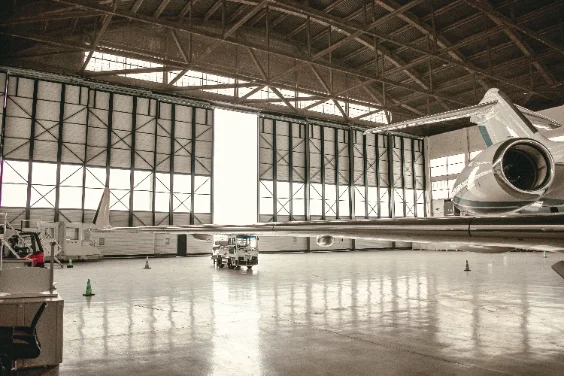
Airliner fuselage in a maintenance hangar

Overseas — aircraft maintenance

Cracks missed at inspection

Part of the roof tore away in flight. The aircraft had flown many thousands of short, high-humidity flights, and fatigue cracks and corrosion had been missed during inspections. One crew member died.

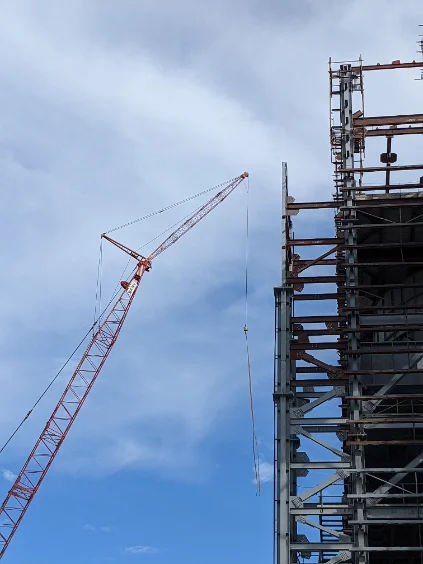
Large crawler crane on a construction site

Overseas — heavy lift

A lift in high wind

One of the world's largest cranes collapsed while lifting a stadium roof section in high wind, killing three ironworkers. The lift went ahead despite the conditions, under schedule pressure.

What we find in Pakistani workshops

Six conditions behind most equipment failures.

Local equivalents of original spares

Bearings, seals and couplings sourced locally or machined in-house, with ratings nobody has checked.

Voltage that swings

Low and fluctuating supply, and frequent restarts after power cuts, shorten motor and drive life.

Dust, lint and heat

Cement dust, cotton lint and summer heat clog cooling and contaminate lubrication far faster than manuals assume.

Lifting gear rated in another unit

Imported cranes, hoists and slings marked in tons, tonnes or pounds, and loads estimated by eye.

Double shifts, single maintenance plan

Machines run twice the hours they were planned for, while servicing stays on the original calendar.

Repairs deferred to the shutdown

Known faults are left running "until the annual shutdown", which is often months away.

Spare parts store with bearings and seals
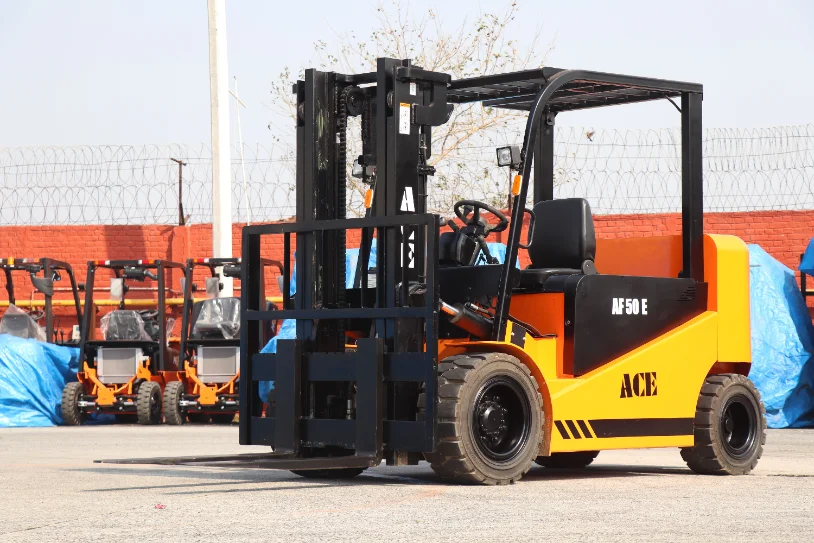
Forklift and lifting equipment in a warehouse
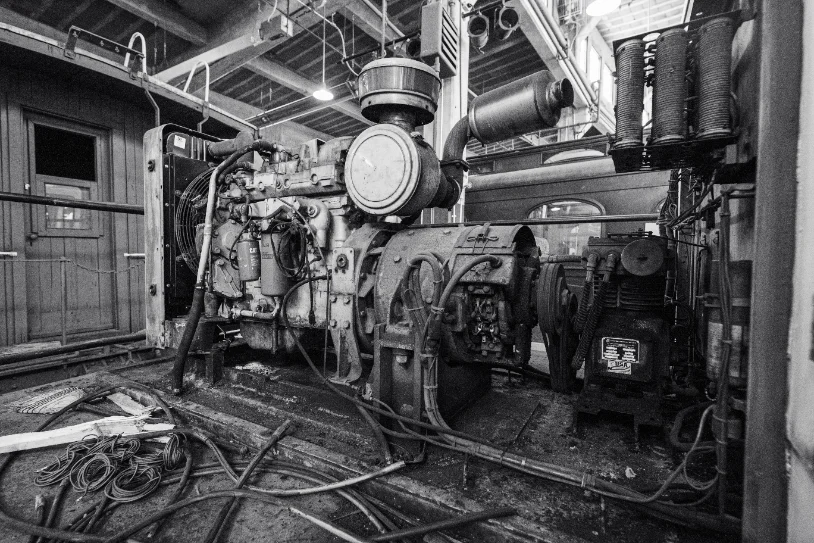
Electric motor and drive covered in dust

The P3i approach

How we investigate an equipment failure. Fact-finding, not fault-finding.

Every P3i investigation is led by a senior investigator and supported by internationally qualified process specialists. You will not receive a list of people to blame, or a long list of generic actions. You will receive the facts, the proven causes, and a short plan that closes the gaps, in this case and across your system.

Independent

No products, repairs or contracts to sell you afterwards.

Senior-led

Thirty years of investigation, from the first call to the final briefing.

Beyond the event

Process specialists find the other cracks before they fail.

Ready to present

Written for boards, buyers, insurers and regulators.

How P3i does it for you

  1. 01

    Keep the broken part

    We tell you what to bag and label before the repair starts.

  2. 02

    Read the logbook

    Maintenance history, spares and every warning recorded.

  3. 03

    Establish how it failed

    With engineering specialists where needed.

  4. 04

    Find why the warning was missed

    Planning, spares, pressure and reporting.

  5. 05

    Protect every other machine

    Our process specialists review similar equipment and the maintenance system.

What you receive

Failure findingsMaintenance history reviewWarning signs missedSpares and planning gapsPlant-wide action planReport for insurers

Call us when

A machine failed and someone was hurtA breakdown stopped productionThe same machine keeps failingA machinery breakdown claim

Free 30-minute case assessment.

Tell us what happened. In confidence, we will tell you what the investigation should cover, how long it will take and what to preserve today.

How we work with you

What happens after you call.

After a failure, the first call is about keeping the broken parts and the logbook before the repair starts. From there, this is the usual pattern.

  1. First hour

    A call with a lead investigator. You leave it knowing what to preserve today and who to call next.

  2. Day one

    An investigator on site, anywhere in Pakistan. Scope and fixed fee agreed in writing.

  3. Week one

    A private briefing on early findings, so urgent risks are dealt with before the report is finished.

  4. Weeks three to four

    The final report, the wider system review and a remedial work plan, presented to your team.

  5. After

    We come back to check the actions were completed and actually worked.

Typical timings for a single-site event. Complex, multi-party matters take longer, and we tell you so on the first call.

What you receive

A full investigation report. This is only its first page.

The summary is what leadership reads first. Behind it sits the complete file: every witness heard, every document and record examined, and every finding tied to numbered evidence, so a board, an insurer, a buyer or a regulator can test it.

P3i Investigation Report · Summary Page 1 · Executive summary

1 · Established sequence

2 · Causes

Immediate
Underlying
Systemic

3 · Wider system findings

4 · Remedial work plan

ActionOwnerDateTest of effectiveness Fit personal locks for every operatorPlant Mgr30 daysSpot audit, 10 isolations

Illustrative summary page. Report length and structure depend on the scope of each case.

Inside the full report

  1. 01Executive summary SHOWNThe findings and actions leadership needs, on one page. This is the page shown here.
  2. 02Terms of reference & scopeThe questions asked, the boundaries of the investigation and who commissioned it.
  3. 03MethodHow evidence was gathered, and which analysis methods were chosen for this case, and why.
  4. 04Verified chronologyThe sequence of events, reconstructed from records, data and accounts, minute by minute where it matters.
  5. 05Site & technical examinationScene, equipment, failed parts, measurements and photographs, with specialists where needed.
  6. 06Witness evidenceInterview schedule, accounts in summary, and where the witnesses agree and where they conflict.
  7. 07Documents & recordsPermits, procedures, maintenance, training, rosters, CCTV, tracker and control-system data reviewed.
  8. 08Causal analysisImmediate, underlying and system causes, each one tied to numbered evidence.
  9. 09System reviewWhere the same weaknesses exist elsewhere in the operation.
  10. 10Findings & conclusionsWhat is proven, what is probable, and what remains open, stated plainly.
  11. 11Recommendations & work planTargeted actions, each with an owner, a date and a test of whether it worked.
  12. 12AppendicesEvidence register, photograph log, interview records, drawings and data extracts.

Every action has an owner, a date and a test of whether it worked. The evidence stays indexed, so any reader can check how each conclusion was reached.

You commission one investigation. You get a review of the whole system.

One breakdown shows you how every machine is maintained.

After the failure is explained, our process specialists review similar equipment, the spares, the maintenance plan and the way defects are reported. You get a short list of targeted actions that protect the rest of the plant, not a generic maintenance checklist.

The event

A coupling fails at speed on a production line

First recorded cause: component wear.

Spares

A third of critical spares on site were non-original and unrated.

Guarding

Guards removed for maintenance on four other lines had not been refitted.

Planning

Service intervals had not changed since the plant moved to double shifts.

Escalation

No rule said who decides whether a machine keeps running with a known fault.

Condition checks

A vibration meter had been bought, but no one had been trained to use it.

Insurance

The breakdown policy required maintenance records the site could not produce.

A typical example, based on what we see across many equipment failure investigations. Not a single client’s case.

From our files

CASE 09 · ANONYMISEDMajor equipment damageRead the case →CASE 05 · ANONYMISEDHeavy vehicle rolloverRead the case →

See all 16 cases →   Client names, people, locations and dates removed.

Questions after a failure

What engineers and owners ask us first.

The part simply wore out. Why investigate?

Because most failures give warning, and the question is why the warning was not acted on. The answer usually lies in spares, planning, production pressure or reporting, and those affect every other machine on site.

Can we repair the machine straight away?

Once the failed parts are secured. Bag and label broken components exactly as found, and do not return them to a supplier or send them for scrap. After that, repair can usually go ahead quickly.

We replace parts on a schedule. Isn't that enough?

Often not. Reliability research found that most failures are not related to age, so fixed intervals miss them. Checking condition — noise, heat, vibration, oil — catches far more.

Can you support a machinery breakdown claim?

Yes. We provide independent findings on failure mode, maintenance and operation for insurers and loss adjusters. Policy interpretation and adjusting decisions stay with them.

Will you only look at this machine?

No. Our process specialists review similar equipment, spares, planning and defect reporting, and give you targeted actions for the gaps that would cause the next breakdown.

Do you investigate outside Pakistan?

Yes. P3i has worked in 15 countries.

Related

Maintenance Failure Injury & Fatality Machinery Breakdown for Insurers Production Loss & Downtime

A machine down?

Keep the broken part. Then call us.

Report a failure 042 37135571-3
Investigator on site